MAKE, NOT TAKE-How your body can protect itself from cellular stress.

Screen Shot 2015-06-10 at 11.00.27 AM

At the very center of our cellular protective pathway is a protein called “Nrf2” that serves as a “master regulator” of the body’s antioxidant response. You might think of Nrf2 as a “thermostat” within our cells that senses the level of oxidative stress and other stressors and turns on internal protective mechanisms.

Soon after Nrf2 was identified, a flurry of scientific discoveries began to show how Nrf2 also regulated genes involved in the production of a wide range of antioxidant enzymes (including SOD, glutathione, and catalase), and detoxification or ‘‘stress-response’’ genes. These protective pathways are involved in seemingly unrelated areas of health from immune function to tissue optimization to cognitive function – but they all share in common the Nrf2 “switch” that enables cells to protect themselves from both internal and external environmental challenges. In effect, Nrf2 activation enables our cells to make their own antioxidants to help us survive – and thrive – in stressful situations.


How does Nrf2 work?

When activated, Nrf2 turns on the production of specific antioxidants the body needs to fight cellular stress effectively. Certain phytochemicals (turmeric, ashwagandha, bacopa, green tea, and milk thistle) synergistically activate Nrf2. Turning on Nrf2 creates a cascading effect that results in the production of several very powerful antioxidants. These antioxidants do a much better job at combating cellular stress than dietary, vitamin or phytochemical source individually. Several antioxidant enzymes, including superoxide dismutase (SOD), glutathione, and catalase are activated through the Nrf2 pathway. Many scientists believe that Nrf2 activation is the “future” of cellular protection and health promotion, this foundation of naturally activating Nrf2 to “solve” the problem of cellular stress is a fundamentally different way of restoring balance in the body.

Staying healthful with a busy schedule

Screen Shot 2015-06-02 at 2.01.19 PM

Got a busy schedule? It can have its perks. You can get so much done. But one of the downsides is trying to keep it all together when you’re being pulled in several different directions. It’s like a tug-of-war going on inside your head. Check out these seven tricks to staying focused and feeling energized while keeping all the balls you’re juggling in the air.

  1. Sleep

How much sleep are you getting each night? If you’re like most people, you’re running on five or six hours—not nearly enough. The rule of thumb for adults is at least seven hours, eight if you can get it, but everyone’s sleep needs are a little different. Pay attention to how you feel in mind and body on different amounts of sleep. Also, adjust for sleep debt. If you’ve been running on fumes for a while, and you know you feel good with seven hours of sleep, you might need to make good in the deprivation department before seven feels right again.

  1. Take Breaks

At least every hour, give yourself a break from whatever you’re working on. Take 10 minutes for a brisk walk, grab some water, do a little yoga, or even read a blog or book. Just something to take your mind off the task at hand and let you re-focus.

  1. Hydrate

It’s a fact: Water makes you smarter. Brain cells depend on water to function, and when you’re dehydrated, your brain becomes less efficient. Water affects focus, short-term memory, and long-term memory, even math—whether you’re solving a complicated equation or simply planning for what time you need to leave to make your flight. Adults in the U.S. on average drink less than 32 ounces a day, but the average adult loses 80 ounces of water every day just by breathing, sweating, and eliminating waste. So if you’re drinking less than 80 ounces of water a day, your brain might feel a little less sharp.

  1. Exercise

Breaking a sweat does as much for your mind as it does your body. Every time you exercise, you feed your brain and muscles with oxygen, increasing your energy and your mental focus while releasing tension and stress. Some studies show that mental focus and IQ performance improve for a full two hours after a workout.

  1. Train Your Brain

If you’re not used to focusing, it can take practice. Don’t worry; you can make a comeback from attention-span atrophy. Start by doing mental tasks like reading, playing strategy games, or writing for longer and longer periods of time, the same as you would if you were training for physical endurance. Teach yourself to go longer by adding time (even if it’s just five minutes) to what you feel your limit is. Read a few more pages. Work a few more problems. Write one more paragraph. Just like an athlete, you might even get a second wind.

  1. Feed Your Mind

Eat high-energy foods that burn slowly, and your body and mind will help you achieve sustained energy and extended mental focus. Foods like oatmeal, trail mix, and fruit are good choices. Refined sugars and simple carbs are not. The initial sugar high will be followed by a crash as the energy quickly burns off that can leave you leave you feeling drained.

  1. Unwind

Meditate, relax in a bath, do a craft, read a book, shoot some hoops—do whatever allows your mind the chance to unwind. It’s a gift to your mind and your body, and it’s the thing that allows you to take on another day refreshed and energized.

Nrf2 Pathway Is the Solution to Better Health and Performance

At present, it appears that all forms of exercise, both aerobic and anaerobic, possess the potential to result in increased cellular stress in both human and animal models.  Several factors appear to play a significant role in the exercise-induced cellular stress response including duration and intensity of exercise, as well as the training status and dietary intake of the subject population.

In the past, the relationship between exercise and oxidative stress has commonly been viewed as a detrimental phenomenon that should be reduced or eliminated in an effort to improve performance and/or health. While cellular stress certainly has the ability to result in physiological damage, perhaps leading to the development of ill-health and/or disease over time, an optimal level of antioxidants produced in our bodies may increase our defenses.

ANTIOXIDANT PILLS ARE NOT THE ANSWER!

cropped-talbott-has-a-powerful-message.png

Could it be that the vitamin pills you think are protecting you are actually causing you harm by accelerating the aging process and even increasing cancer risk? In fact, a growing number of studies show that isolated, synthetic, high-dose antioxidant supplements—you know, the bottles of “multi” pills you get at the grocery store or even the health food store that contain vitamin E, selenium, and beta-carotene, among others—may have a dark and dangerous side.

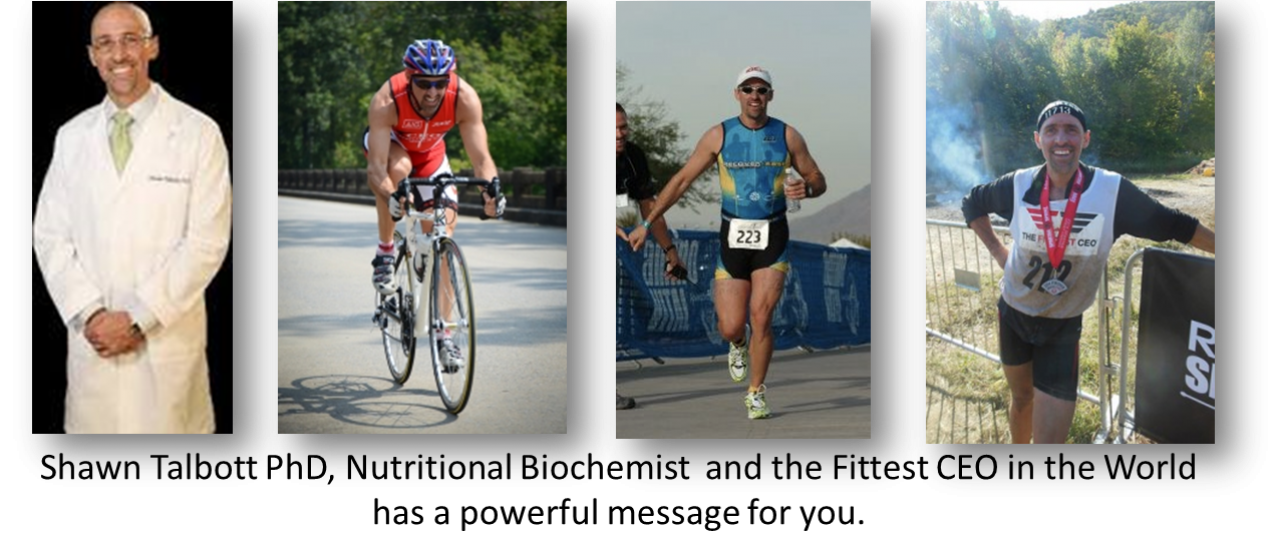
We know that free radical damage is a real and growing menace to our bodies, threatening our cells, DNA, tissues and organs with inflammation and degradation and leading to a host of chronic diseases, including cancer, chronic fatigue, diabetes, arthritis, and heart disease. But there’s great news! Exciting new research is also demonstrating how the human body protects itself by turning on its own built-in and ultra-powerful antioxidant defense systems. Best-selling author and researcher Shawn Talbott, PhD, teaches the protective actions of the Nrf2 pathways and how they represent the true solution to less illness, better health, and an enhanced level of vitality and wellness you never thought possible! You can find out more at this site:  http://www.shawntalbott.com